In the world of luxury textiles, few names carry as much weight, history, and mystique as Pashmina. Often referred to as “Soft Gold,” a genuine Pashmina shawl is more than just a garment; it is a masterpiece of patience, a legacy of the Himalayan nomads, and a testament to the skill of Kashmiri artisans.
However, as the global demand for this “diamond fiber” has surged, so has the market for sophisticated counterfeits. For a wholesale buyer or a retail connoisseur, the ability to distinguish between a genuine hand-woven Pashmina and a power-loom viscose or semi-pashmina blend is an essential skill.
In this extensive guide, we will pull back the curtain on the testing methods, the microscopic science, and the tactile markers of the world’s finest wool.
1. Understanding the Source: What is “Pure” Pashmina?
To identify the real thing, you must first understand what it is. Pashmina is not just “fine wool.” It is specifically the undercoat of the Capra Hircus goat, which lives at altitudes above 14,000 feet in the Ladakh region of the Himalayas.
At these temperatures (dropping to $-40^\circ\text{C}$), the goat grows a secondary layer of downy fur that is exceptionally thin—usually between 12 and 15 microns in diameter. To put that in perspective, a human hair is roughly 75 microns.
The “Pashmina vs. Cashmere” Distinction
While all Pashmina is technically a high-grade form of Cashmere, not all Cashmere is Pashmina. “Pashm” refers specifically to the raw unspun wool of the Ladakhi goat, processed using traditional Kashmiri hand-spinning and hand-weaving techniques.
2. The Physical Inspection: Tactile and Visual Markers
Before resorting to destructive testing (like the burn test), use your senses. Pure Pashmina has unique physical characteristics that machines simply cannot replicate perfectly.
A. The “Irregular” Weave
Hold the shawl up against a soft light source. Because authentic Pashmina is woven on a hand-loom, the weave will never be 100% symmetrical. You will notice slight irregularities in the warp and weft.
-
The Fake: Power-loom shawls (often made of silk-wool blends or viscose) will have a perfectly uniform, “grid-like” appearance.
B. The Matte Luster
Pure Pashmina has a natural, soft matte finish. It does not “shine” under artificial light.
-
The Fake: If the shawl has a distinct metallic or high-gloss sheen, it likely contains silk or synthetic polyester fibers.
C. The “Pilling” Paradox
Believe it or not, pilling (the formation of small lint balls) is a sign of purity. Because the fibers are so fine and short, they naturally rub against each other.
-
The Reality: If a “Pashmina” looks brand new and perfectly smooth after months of heavy use, it’s likely a synthetic blend treated with chemicals to prevent pilling.
3. The Definitive Tests: Science in Your Hands
If you are a wholesaler looking to verify a bulk shipment, these three tests are your gold standard.
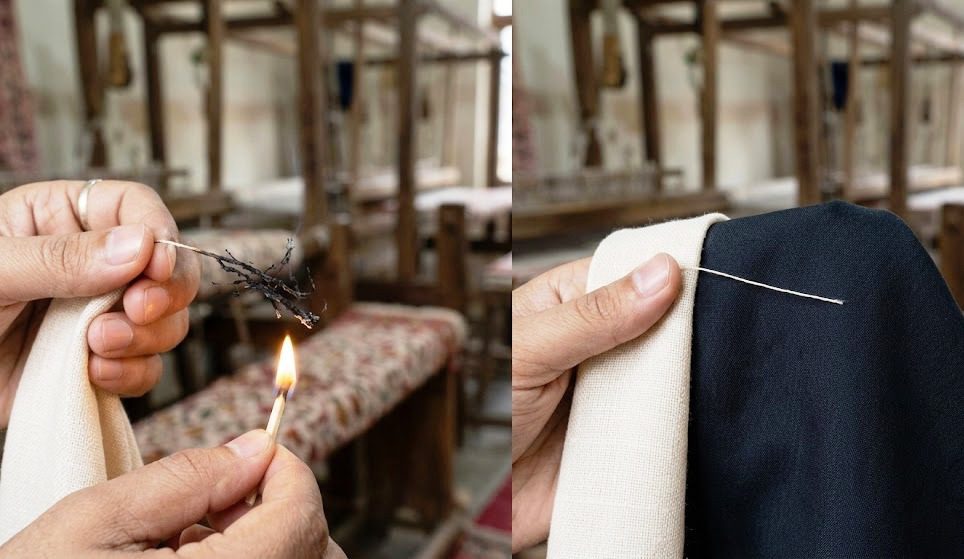
The Burn Test (The Most Reliable)
Take a small, inconspicuous thread from the fringe of the shawl and burn it with a match.
-
Smell: It should smell like burnt human hair. This is because Pashmina is a protein fiber.
-
Residue: The ash should be gritty, black, and easily crushable between your fingers.
-
The Fake: If it smells like burning plastic/paper or leaves a hard, melted bead, it is synthetic (Acrylic or Polyester).
The Static Electricity Test
Rub the fabric against a plastic object or another piece of polyester.
-
Pure Pashmina: Being a natural animal fiber, it is highly resistant to static. It will not cling to your skin or crackle.
-
The Fake: Synthetics will generate immediate static electricity, sticking to your arm or clothes.
The “Ring Test” (With a Caveat)
Legend has it that a pure Pashmina can pass through a wedding ring. While this is true for thinner Shah-tush or very fine 1-ply Pashmina, modern high-quality Pashminas are often 2-ply for durability and may struggle with a small ring. Use this as a fun indicator, but not a final verdict.
4. Identifying Hand-Embroidery (Sozni vs. Machine)
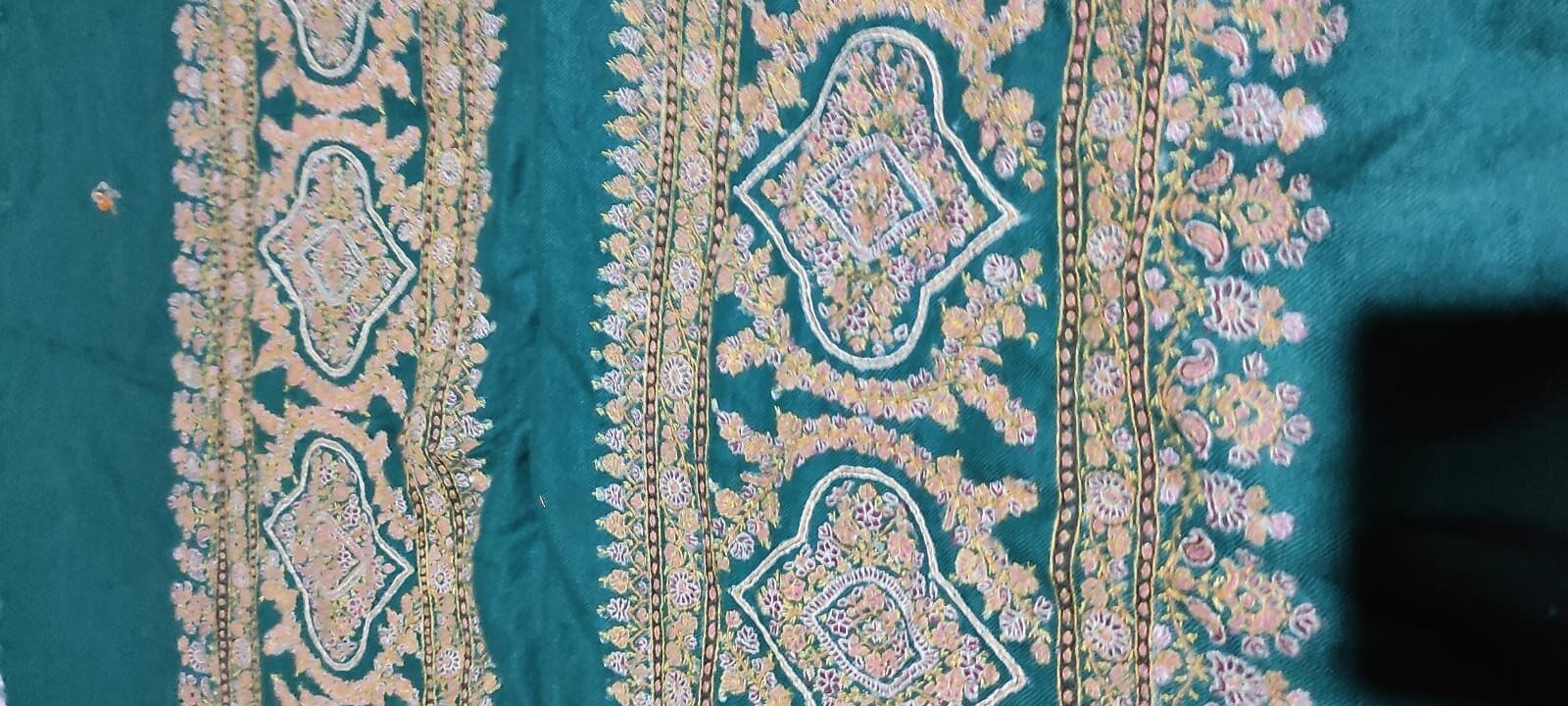
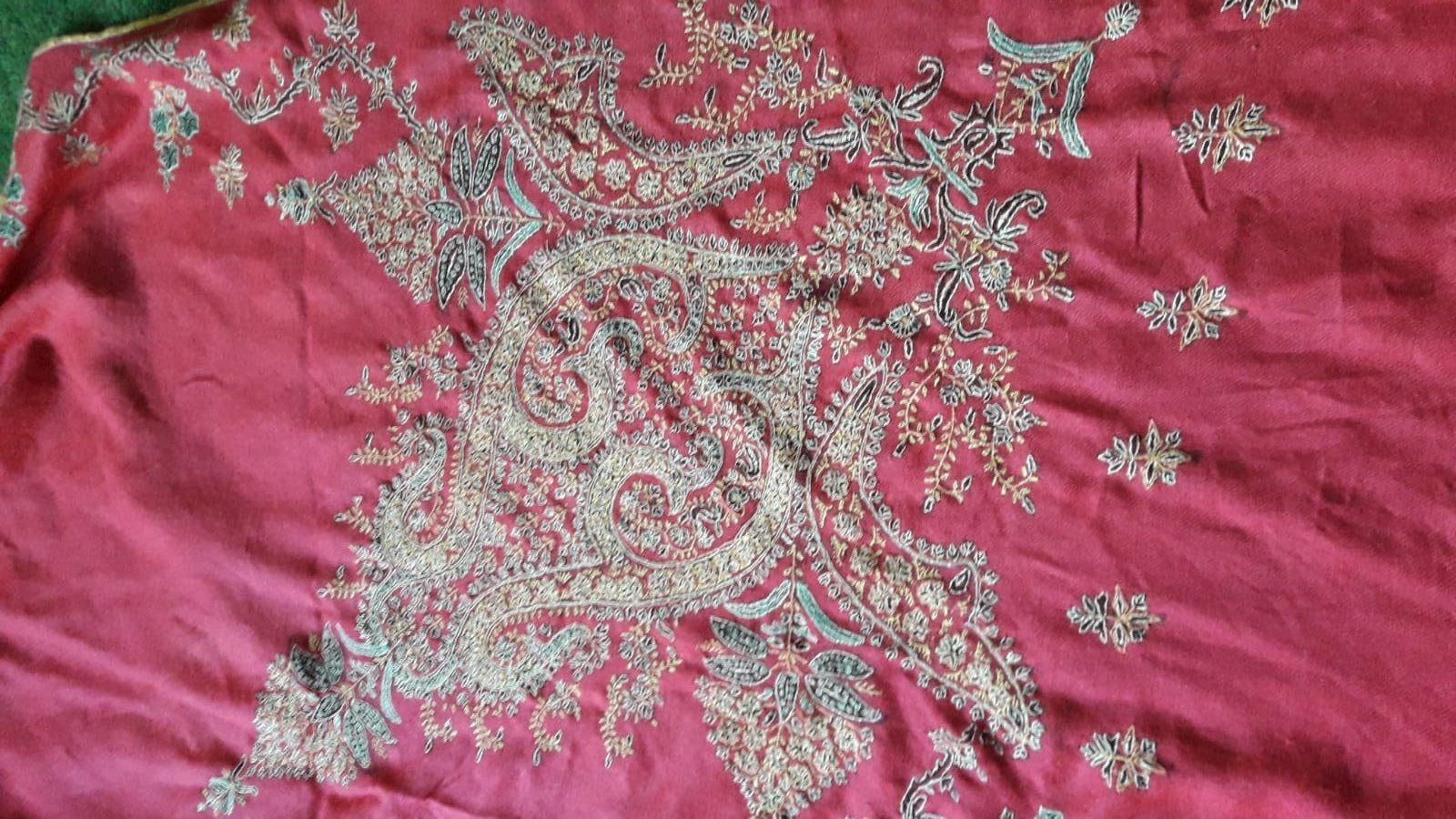
At Kashmir Wholesale Bazar, we specialize in Sozni and Kani work. Identifying the labor behind the art is crucial for pricing.
| Feature | Hand Embroidery (Sozni) | Machine Embroidery |
| Reverse Side | Slightly messy; you can see the thread knots and “path.” | Perfectly neat, often with a white “bobbin” thread. |
| Thread Texture | Natural silk or cotton thread used. | High-shine polyester thread. |
| Design Depth | Appears slightly raised and “organic.” | Flat, stiff, and repetitive. |
5. Why Authenticity Matters for Your Business
Buying pure Pashmina is an investment. From a wholesale perspective, selling “Semi-Pashmina” as “Pure” can destroy a brand’s reputation.
Thermal Properties:
The insulation of pure Pashmina is unmatched. The fiber has a unique “hollow” structure that traps air.
When a customer buys a real shawl, they aren’t just buying warmth; they are buying a piece that will soften with age and can be passed down as an heirloom.
6. How to Spot “The Viscose Trap”
The most common “Super-Fake” in the market today is Viscose (Rayon). It is soft, it is cheap, and to the untrained eye, it looks like Pashmina.
-
The Weight Check: Pure Pashmina is incredibly light. A full-sized shawl (2 meters) usually weighs between 200g and 300g. Viscose is significantly heavier.
-
The Water Absorption: Natural wool repels water initially, while viscose soaks it up like a sponge immediately.
7. Caring for Pure Pashmina
Once you’ve identified your pure piece, preservation is key.
-
Storage: Always store in a muslin bag. Never hang a Pashmina; the weight of the weave will cause it to lose its shape.
-
Cleaning: Professional Dry Clean only. If hand-washing is necessary, use a dedicated wool shampoo in lukewarm water (not exceeding 30°C).
Conclusion: Trust Your Source
Identifying pure Pashmina is a blend of science, touch, and experience. However, the easiest way to ensure authenticity is to work with a supplier that maintains a transparent supply chain directly from the looms of Srinagar.
At Kashmir Wholesale Bazar, we pride ourselves on being the bridge between the master weavers of Kashmir and the global market. Every piece in our collection undergoes rigorous quality checks to ensure that the “Soft Gold” you receive is 100% authentic, hand-processed, and ethically sourced.