The Definitive Guide to Authentic Kashmiri Heritage Crafts
Kashmir has long been celebrated for its extraordinary handicrafts, which embody centuries of artistic refinement, cultural exchange, and unparalleled craftsmanship. These crafts are not merely decorative objects; they carry the stories of tradition, spirituality, and the intimate relationship between our artisans and the Himalayan environment.
At Kashmir Wholesale Bazar, we are committed to preserving this legacy. This guide explores the authentic methods, materials, and heritage behind the GI-certified crafts we offer, from the ‘soft gold’ of Pashmina to the intricate naqashi of our copperware.
1. The Art of Pashmina: The ‘Soft Gold’ of the Himalayas

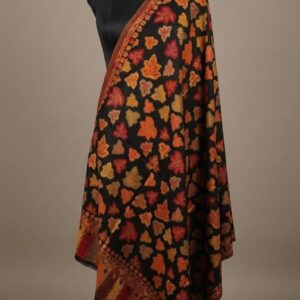
True Pashmina is one of the most luxurious and sought-after textiles in the world. Its heritage is deeply tied to the high-altitude landscapes of the region and the meticulous hand-skills of Kashmiri weavers.
The Raw Material: Changthangi Wool
Authentic Pashmina begins at altitudes above 14,000 feet on the Changthang plateau in Ladakh. Here, the rare Capra hircus (Changthangi goat) develops a fine, insulating undercoat to survive extreme winters. In the spring, herders naturally comb away—never shear—this fleece. Each goat yields only 80 to 170 grams of usable wool per year.
The Weaving Process
Once the raw fleece travels down to the Kashmir Valley, it undergoes a transformation that relies entirely on human touch:
-
Spinning: The fine fibers (measuring roughly 12 to 16 microns) are hand-spun on a traditional wooden charkha.
-
Weaving: The yarn is then handwoven on traditional looms.
-
The GI Tag: Since 2008, genuine Kashmir Pashmina has held a Geographical Indication (GI) status. When you buy a GI-Tagged Kasheer Brand Pashmina from our wholesale bazar, you are guaranteed authenticity, ethical sourcing, and traditional hand-weaving.
Buyer’s Tip: A genuine Pashmina is so incredibly fine that a full-sized shawl can easily be pulled through a standard wedding ring.
2. Kashmiri Embroidery: Aari, Sozni, and Tilla

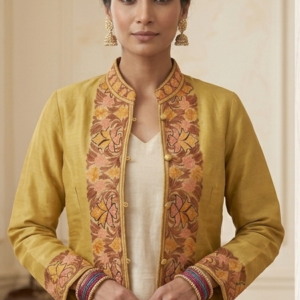
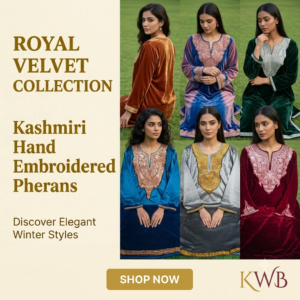
Kashmiri textiles are elevated from beautiful to breathtaking through centuries-old embroidery techniques.
| Embroidery Type | Technique & Tool | Visual Characteristics | Best Suited For |
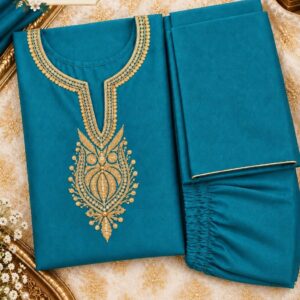
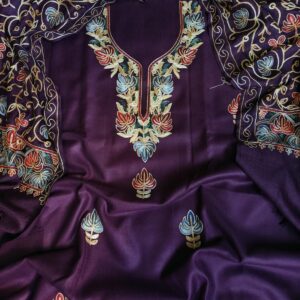
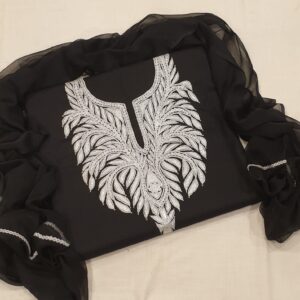
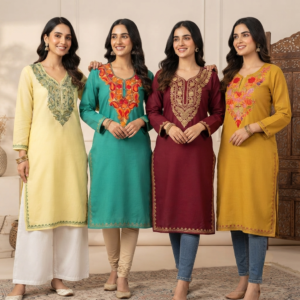
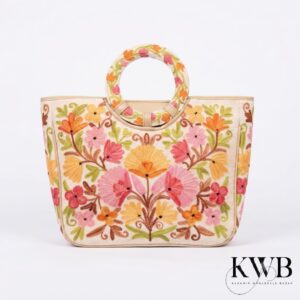
| Aari Work | Done with a specialized hooked needle (aari). | Thick, continuous chain stitches forming vibrant, bold floral and vine motifs. | Pherans, jackets, rugs, and heavy cotton/wool suits. |
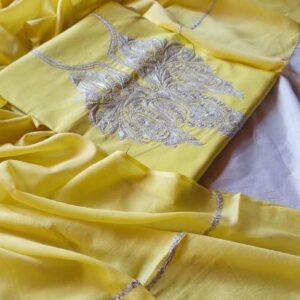
| Sozni Work | Extremely fine needlework, often credited to the 14th-century Sufi scholar Mir Syed Ali Hamdani. | Delicate, intricate patterns (paisleys, chinar leaves) that can fit up to 500 stitches in a single centimeter. | High-end Pashmina and Semi-Pashmina shawls. |
| Tilla Work | Gold or silver thread is tied down with a secondary thread. | Metallic, regal, and shimmering aesthetic. Historically used for royalty. | Bridal wear, premium velvet Pherans, and formal suits. |
3. The Grandeur of Kani Weaving

The Kani shawl is an architectural marvel of the textile world. Woven rather than embroidered, this technique is believed to have arrived in the 15th century and takes its name from the village of Kanihama.
-
The Technique: Weavers use eyeless wooden bobbins called kanis to interlock colored threads directly on the loom.
-
The Talim: A master designer maps out the complex pattern using a coded shorthand system called talim. The weaver follows this code, manipulating dozens of bobbins at once.
-
The Commitment: A single Kani shawl can take anywhere from six months to three years to complete. Kani weaving holds its own distinct GI registration to protect it from machine-loomed imitations.
4. Kashmiri Papier-Mâché: From Pulp to Perfection

Introduced from Persia in the 14th century, Kashmiri papier-mâché transforms discarded paper into museum-quality decorative art.
-
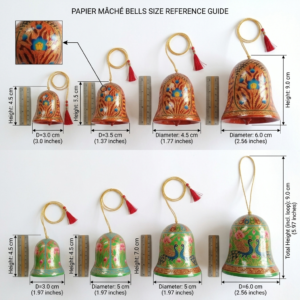
Sakthsazi (Making the Base): Paper is soaked, pounded into a pulp, mixed with adhesive, and molded over wooden forms into vases, bowls, and boxes.
-
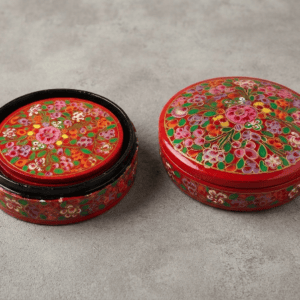
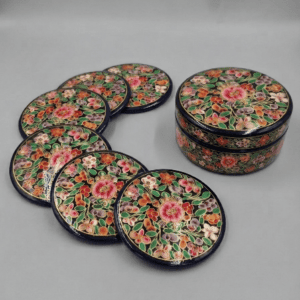
Naqqashi (The Painting): Master artists paint incredibly intricate, freehand designs requiring immense precision. Motifs often include the Chinar leaf, kingfishers, roses, and geometric lattice patterns.
-
The Finish: The piece is finished with a layer of varnish, imparting a rich, glossy smoothness that brings the colors—sometimes utilizing real gold or bronze dust—to life.
5. Copperware (Tamba): The Heart of the Kashmiri Kitchen

Wander through the old city of Srinagar, and you will hear the rhythmic tapping of the copper smiths. Copperware is an essential part of Kashmiri household utility and wedding traditions.
-
The Samawar: The iconic Kashmiri tea kettle used to brew noon chai and kahwa. Its central tube holds burning coals to keep the tea boiling.
-
Naqashi Engraving: Using a hammer and small chisels, artisans tap elaborate floral and calligraphic designs directly into the copper surface.
-
Kalai: Utensils meant for cooking or serving food are coated with a layer of tin (kalai) to prevent the copper from reacting with the food.